Dr. Geoffrey Hinton gives $350,000 to organization supporting safe water in Indigenous communities
Toronto, Ontario, November 4, 2024 – Dr. Geoffrey Hinton, a recent co-recipient of the prestigious Nobel Prize for Physics has announced a donation of $350,000 to Water First Education & Training Inc. – the sum of half of his prize winnings. Dr. Hinton, a computer scientist and professor emeritus from University of Toronto, was awarded the prize for his groundbreaking contributions, along with John Hopfield, in the field of artificial intelligence.
Speaking with Water First, Dr. Hinton expressed his concern with the conditions in many Indigenous communities, and his connection to safe water that prompted the donation.
“We lived in Peru for a couple of months where we adopted a child. The water was not safe to drink, and seeing the extra work and health care that goes into protecting a child from poisonous water cemented the belief that we must have clean water.”
Indigenous communities across Canada face serious and complex clean water challenges. Water First works in collaboration with Indigenous communities to deliver training and education programs to help build local capacity and support highly-skilled people in the fields of water operation and environmental resource management.

As a scientist and educator, Dr. Hinton praised the Water First model of providing STEM education to build capacity in Indigenous communities. “When you provide education, you’ve now got somebody who can keep the water safe for forty years.”

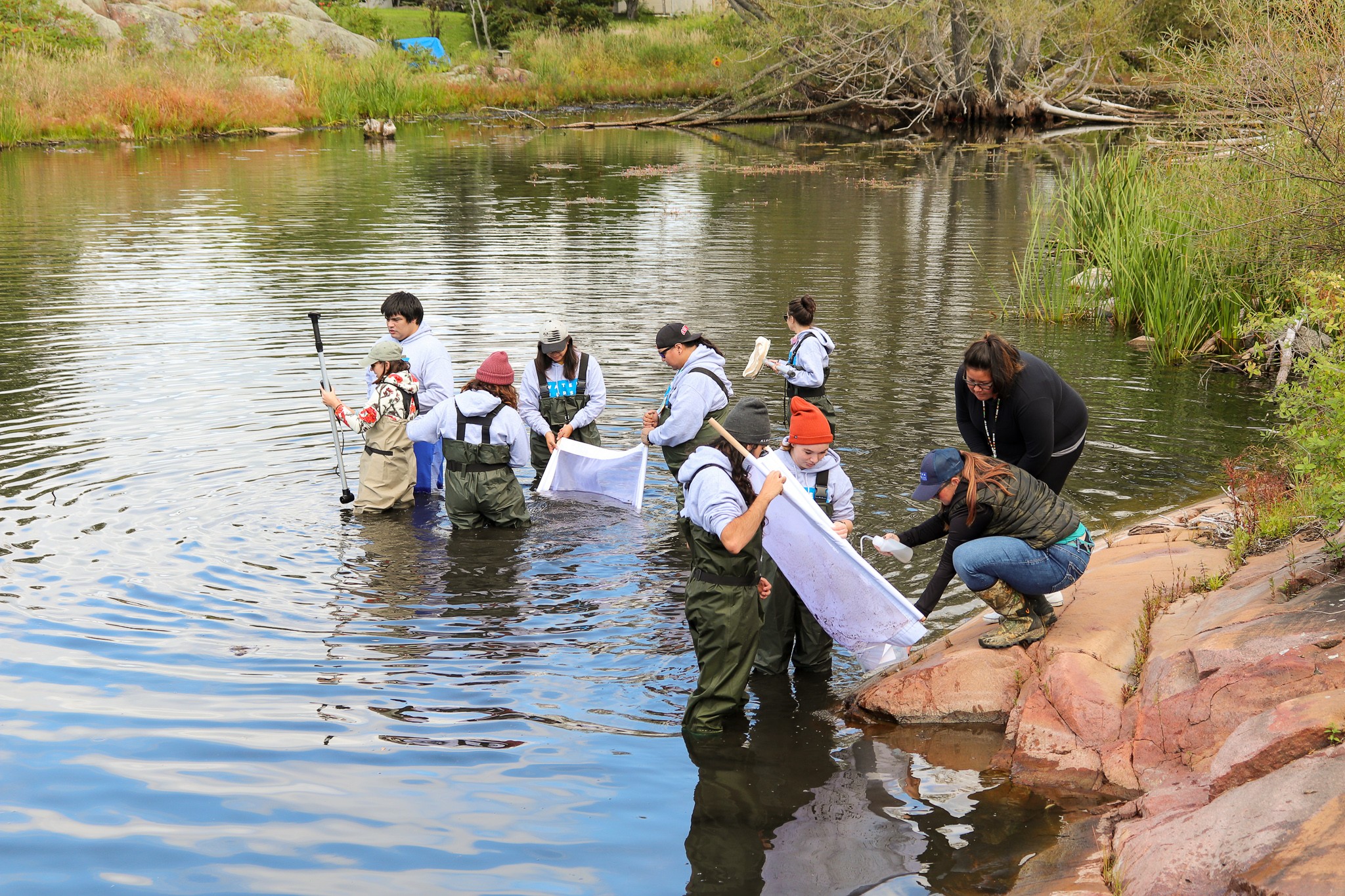
Water First internships provide participants with training and support to obtain entry-level certification as water operators and in fish and water resource management. The organization also provides programming to elementary and high school students as an introduction to water science and stewardship, to prepare and motivate students to pursue a career in the water protection field.
“Dr. Hinton’s donation is such a wonderful, positive thing for Water First and the Indigenous communities we work with,” said John Millar, Water First’s Executive Director and Founder. He added that the support of an esteemed scientist and educator is a boost for the organization. “Our trainers, educators and support staff are so passionate about what we do, and it’s challenging work. This acknowledgement of the importance of our work is very motivating.”

Regarding the donation, Dr. Hinton said, “What I really hope to see is that (Water First) will be able to train more people in water technology, and then the Federal Government will help ensure that the money for good employment is provided. Safe water needs trained people and the money to keep them employed.”
Sustainable access to safe, clean water in Indigenous communities in Canada continues to be a critical issue. In Canada, 13% of First Nations communities are affected by a drinking water advisory; in Ontario, it’s 25%. The challenges are complex and layered. Communities may face issues relating to infrastructure, source water quality or people to manage water systems – or more than one of these issues at a time. Water First works with Indigenous communities that have identified education and training as part of their solution to the water crisis.
Dr. Hinton said that upon his return to Toronto from South America, he was struck by what a luxury it was to turn on a tap and have clean water pouring out. “In the last century, there was huge progress made in better sewage management and safe drinking water. It should have gotten to everybody by now.”