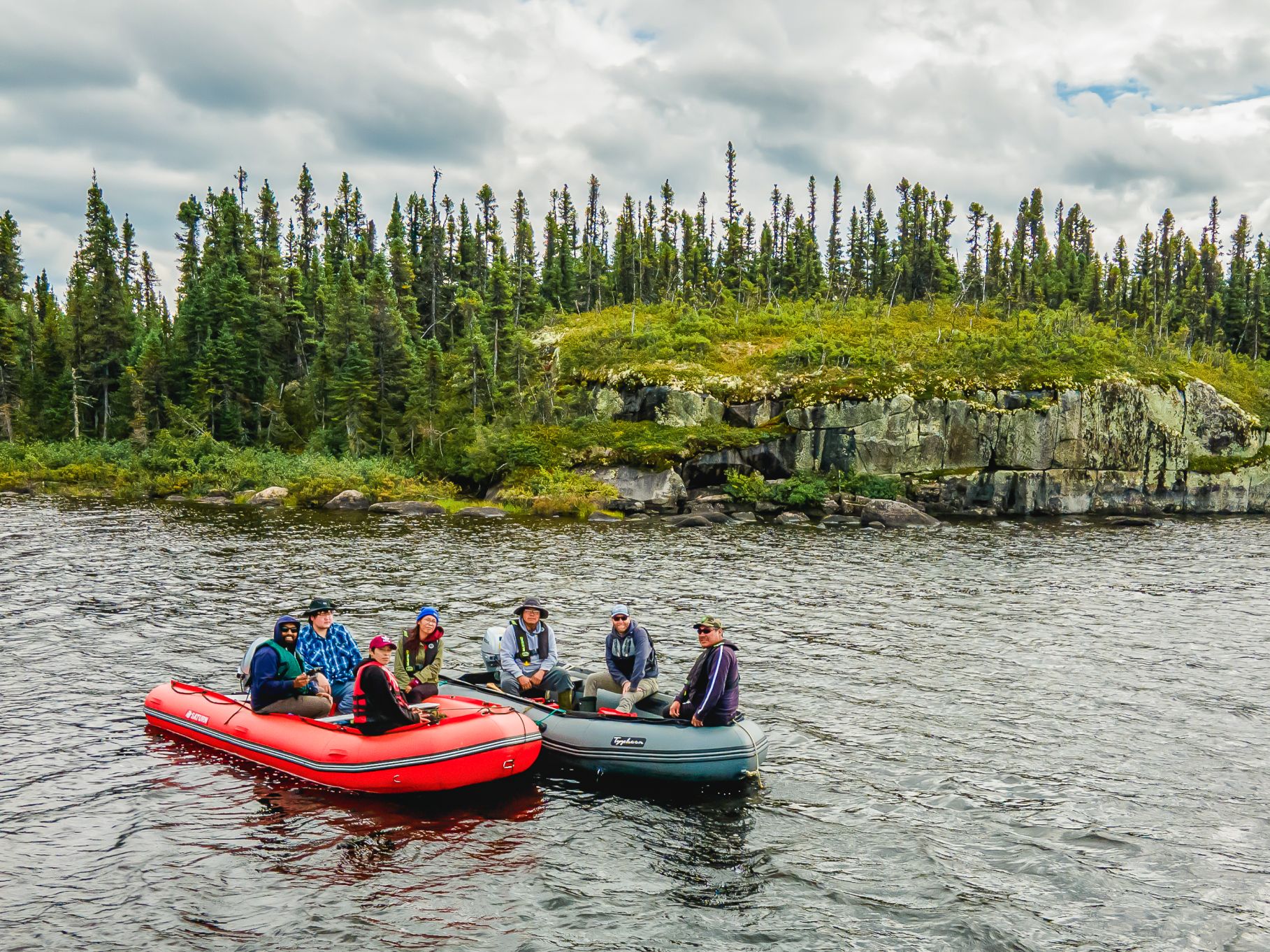
Participants of the Ogemawahj Tribal Council Drinking Water Internship Program and Water First celebrate graduation
Toronto, Ontario September 23, 2024 – When Janelle Snache first heard about the Drinking Water Internship being offered by Water First Education & Training Inc. right in her home community of Rama First Nation, she knew she couldn’t pass it up. Returning home after nine years away, Janelle was looking to embark on a path that married her love of environmental science with her desire to launch a career that could benefit her community.
Now, after completion of the 15-month program, Janelle and seven other interns from communities in Ogemawahj Tribal Council (OTC) are celebrating their graduation as water operators.

“Collaborating with the other interns and learning together has been the best. We’ve gained a new perspective on the importance of water and how we treat it, and I’ll be able to take that knowledge with me into my career,” shares Janelle Snache, OTC Graduate from Rama First Nation.
Water First’s Drinking Water Internship is a paid internship that recruits Indigenous adults to the drinking water field, and helps them obtain entry-level certifications required to begin their careers in water treatment. Having qualified, local personnel also supports communities in having access to safe, clean drinking water for the long term.
During the 15-month internship program, each intern accumulated 1,800 hours of on-the-job experience in water treatment plants, which is a part of the water operator in training (OIT) certification process. Interns also pursued additional water operator certification exams including water quality analyst and the entry-level course for drinking water operators, as well as relevant environmental training like GIS and water sampling which can lead to work in both drinking water treatment and the environmental water field.

Paxton King, another OTC Graduate from Rama First Nation says, “I’m proud of myself for getting to the end of this internship. I’m excited to graduate and am looking forward to putting my newfound skills to use. Water First has provided the best education I’ve ever had.”
After graduation, interns join the Water First Alumni Network to stay engaged, build local networks and access opportunities for ongoing professional development and peer support.
Following the ceremony, Mary McCue-King, Executive Director of Ogemawahj Tribal Council said, “Working with Water First, the collaboration was phenomenal. I would love to see this again – to train more of our community members to be water operators and water protectors. We just created eight new water advocates from our communities, and I’m so proud of that.”
The OTC Drinking Water Internship began in July, 2023, the fourth completed since Water First’s pilot internship in 2018. Most recently, the non-profit organization launched a Drinking Water Internship with Interlake Reserves Tribal Council in Manitoba – their first outside of Ontario – as well as the inaugural Environmental Water Internship, which will lead interns to entry-level certification in Water Quality, Environmental Data, and Fish Conservation.

Water First Executive Director and Founder, John Millar explains, “Expanding our internship programs means the opportunity to work with even more communities in addressing water challenges and building local capacity. The need for trained water operators and environmental technicians continues to grow in Indigenous communities, and thanks to successful collaborations like this one with OTC, we can support the career development of even more qualified water operators.”
Sustainable access to safe, clean water in Indigenous communities in Canada continues to be a critical issue. In Canada, 13% of First Nations communities are affected by a drinking water advisory; in Ontario, it’s 25%. The challenges are complex and layered. Communities may face issues relating to infrastructure, source water quality or people to manage water systems – or more than one of these issues at a time. Water First works with Indigenous communities that have identified education and training as part of their solution to the water crisis. Safe water needs skilled people, and now thanks to the OTC graduating class, eight more have entered the field.