Home / Roots are claws that hold the earth in place
Roots are claws that hold the earth in place
This past October, Water First collaborated with Matachewan First Nation to deliver a series of educational workshops at the local school and a tree-planting field trip in the community.
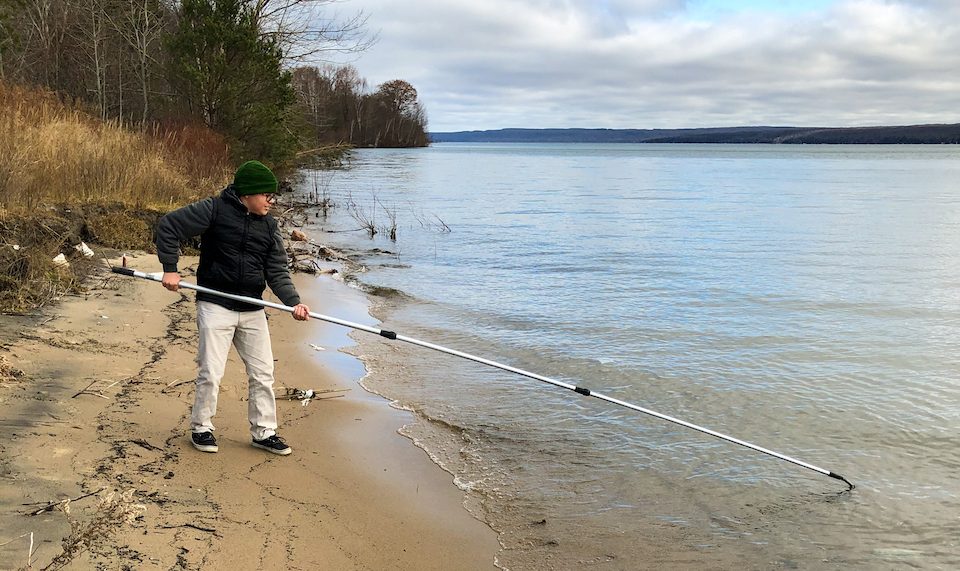
Students in the Indigenous program at Kirkland Lake District Composite school joined those from the First Nation to plant pine and cedar seedlings in a community garden, as well as a cedar hedge on the shore of Turtle Lake to reduce erosion into the water. Before the kids began their tree-planting, an Elder performed a smudging ceremony and gave a short teaching about the history of the area’s local plants and vegetation.
Tree planting with youth from Matachewan First Nation
Newly planted cedar hedge along the shore of Turtle Lake.
Tree roots help stop erosion
Waterside tree planting is important both to the local waterways and the people who live adjacent to them. Tree roots hold onto soil, preventing unnatural amounts of sand and dirt from entering the water systems, which can have a negative impact downstream and damage aquatic ecosystems. Trees provide organic material and habitats for animals, and their shade acts as a temperature monitor for aquatic wildlife.
Trees and other natural vegetation create a buffer between land use and natural habitats. They also benefit us by reducing the impact of flooding, a trend which is becoming more commonplace due to the pressures of climate change.
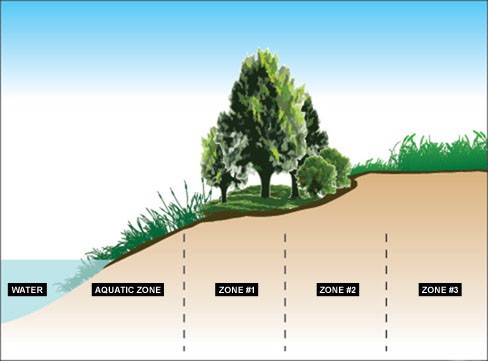
A cross-section of a stream and the adjacent riparian area. The sketch shows four zones and the vegetation associated with each. Moving from the water to the upland, the first zone is the aquatic zone and is populated with aquatic plants such as sedges and reeds. The next zone, Zone 1, is an undisturbed forest. Zone 2 is a managed forest of shrubs and trees and Zone 3 is a mix of grasses that help control runoff from neighbouring fields. (Image courtesy Agriculture and Agri-Food Canada)
Drinking water advisory statistics are for federally maintained systems on First Nations reserve lands only. These numbers do not include private systems or systems in Inuit communities.
Drinking water advisories include short-term (under 1 year) and long-term (more than 1 year) boil water advisories, do not consume advisories, and do not use advisories for First Nation communities in Canada.
Calculating the number of drinking water advisories is a complex process. Water First relies on information from several different sources.